


ERP for B2B E-Commerce: Boost Efficiency or Bust?
Summarize with
Enterprise Resource Planning (ERP) promises seamless B2B e-commerce integration—but does it always deliver? Before investing, uncover the real impact of ERP on scalability, automation, and profitability.
B2B, particularly at the corporate level, has a dizzying number of moving parts. Whether it's payroll or inventories, balancing data from all throughout the company can be a daunting task. Making sound business judgments becomes even more difficult if you manually track each of these data pieces. However, businesses can centralize this data with an Enterprise Resource Planning (ERP) software solution.
With ERP software, all of your business's moving parts are synced, and your company can stop relying on its own manual, error-prone processes and benefit greatly. In fact, 95% of businesses benefit significantly following ERP deployment by lowering process times, strengthening collaboration, and centralizing company data. Keep reading to learn more about ERP software integration for B2B eCommerce companies.
Key takeaways
- ERP Centralizes Business Operations: Enterprise Resource Planning (ERP) software integrates all functional areas of a business, streamlining operations, reducing errors, and improving efficiency.
- Key Benefits of ERP: B2B eCommerce companies benefit from ERP with better customer service, cost savings, improved reporting, and a single source of truth for business data.
- Challenges of ERP Implementation: Despite its advantages, ERP systems require long implementation periods, extensive employee training, and significant financial investment before delivering long-term ROI.
- Core dna and ERP Integration: Core dna helps businesses like VZug automate internal processes by integrating with ERP systems via APIs, reducing manual work and improving efficiency.
On this page:
What is Enterprise Resource Planning (ERP)?
Many B2B companies use various software tools to manage their day-to-day operations. ERP is a software solution that integrates all a business's functional areas, from accounting and human resources to supply chain management and customer relationship management (CRM).
With any business, particularly a B2B eCommerce company, the end-to-end processes must be clearly documented, recorded, and stored in an organized way. Therefore, companies need to have a system that can store all of the data for each department in one place. Enterprise Resource Planning software does this by providing an integrated view of the entire business, allowing companies to share data across departments and devices.
ERP software also streamlines business operations, which leads to reduced costs, increased efficiency, better-managed data, and faster response times. ERP software also enables companies to track inventory levels, manage production schedules and perform financial analysis. By connecting all of these functions in one place, ERP software helps B2B eCommerce companies become more efficient at running their businesses.
For example, if a company has multiple warehouses worldwide and wants to know how much inventory is available at each location, it can use Enterprise Resource Planning software to generate reports showing exactly how much product is on hand at each warehouse location — regardless of which country it's located in.
Benefits of ERP
Here are some benefits a B2B eCommerce company may gain from an ERP platform:
1. Better Customer Service
With options such as eCommerce and online shopping, purchasing from an app, and shopping or picking up in-store, you want your customers to have the same great experience with your company no matter how they shop. Integrating with an ERP system is crucial for transferring client order and fulfillment information into the online storefront and ensures that all of your stores provide the same high-quality omnichannel experience to your consumers.
Also, because customer profiles, purchase histories, price tiers, order preferences, payment details, and more are all easily accessible in one central location, you’ll be able to serve B2B eCommerce consumers more quickly by making the necessary data more accessible to all of your staff members. Enterprise Resource Planning is a potent tool for your B2B eCommerce strategy to better shape client journeys and customize interactions with your organization. Improved Fulfillment
ERPs ultimately enhance your customers' buying experience with your B2B eCommerce company. Using ERP software to generate product pick lists automatically lowers human error, product returns, and shipping errors for B2B eCommerce companies. With fewer errors and a more streamlined process, ERP systems increase on-time deliveries by 24%, according to the Aberdeen Group.
2. Cost Savings
Better customer service and improved fulfillment lead to cost savings. In fact, research from the Aberdeen Group shows that ERP software reduces operational costs by 23% and administrative expenses by 22% by enhancing the efficacy with which a business is managed. In addition, using ERP software leads to greater productivity across the board, from human resources and supply chain management to engineering.
Inventory planning and management play a significant role in the cost savings factor of an ERP. When Motrec Industries switched to Genius ERP for inventory tracking, they saw savings of $400,000. Errors, a lack of product information, or a lack of monitoring of products are all sources of unnecessary waste that can be avoided when businesses employ integrated Enterprise Resource Planning systems. Perishable goods' expiration dates can be monitored, excess stock reduced, and upsell and reordering chances maximized via inventory management.
3. Business Processes and Reporting
The right Enterprise Resource Planning system will not only consolidate all of your data in one place but will also include robust business intelligence (BI) tools for analyzing that data. As a result, you'll be able to generate actionable reports to help you boost efficiency and output and make more informed decisions about your B2B eCommerce company.
Even better, you can understand ERPs' data and information without a data scientist's degree. A high-quality Enterprise Resource Planning system will have an abundance of informative and straightforward reports pre-built into the system. Using these reports, you can easily monitor key performance indicators (KPIs), assess your operations, and spot problem areas. With accurate information, you can steer your company in the best possible way.
This is supported by data from Accenture's research, which found that 80% of respondents said their ERP solutions had allowed them to develop new applications that leverage cross-functional business logic and data.
4. Single Source of Truth
B2B eCommerce organizations can operate more efficiently without a complex back-and-forth between platforms by connecting and integrating all of their data. ERP integration connects a company's ERP software to other applications. Sharing data across systems improves productivity and insights and creates a single source of truth.
Disadvantages of ERP
Even with all of the advantages, there are still some factors that you should consider before deciding if ERP integration is right for your B2B eCommerce company:
1. Long Implementation Period
The implementation and integration of an ERP system takes time, especially with the complexities of a B2B eCommerce company. If you decide to proceed with this kind of program, it's important to recognize that everything might not go according to plan. According to Panorama Consulting, only 21% of businesses reported having completed implementation within the planned time window.
2.Training
Each employee needs to be made aware of the system and encouraged to make use of it for it to be effective. You must communicate the ERP system's functionality and value proposition to all employees. As a result, extensive training could be needed. This factor needs to be considered if you are considering implementing an ERP.
3.Costs
The total cost of an ERP depends on many factors. Some of these include the size and structure of the business (B2B or B2C), whether a cloud-based or in-house ERP is being implemented, and whether or not you plan on integrating your current apps with the new ERP software. There are some open-source platforms, but you’ll likely need the customization and more robust offering of a paid ERP platform. According to a 2021 ERP Focus report, the price tag of deploying an Enterprise Resource Planning system for mid-sized businesses might be anywhere from $150,000 to $750,000.
Additionally, when an ERP system is implemented, the costly and time-consuming process doesn't instantly pay off. The Aberdeen Group found that ERP systems are at their most effective after being in place for seven years. If you are considering ERP integration for your B2B eCommerce business, you’ll need to be patient to see long-term positive financial and ROI outcomes.
When is it time to consider an ERP?
Here are a few signs that it may be time to consider ERP software integration for your B2B eCommerce company:
- Your company is experiencing growing pains.
Having trouble keeping track of many spreadsheets, juggling multiple pieces of software, or getting your programs to talk to one another are problems that a developing business is likely to encounter, highlighting the need to use an ERP system. The most notable benefit of ERP is how it unifies previously separate processes into a unified system. Since data only needs to be entered once into a centralized system, the possibility of human error is minimized.
- It's difficult to keep up with customer demands.
Customers are the lifeblood of every business, and broken promises may spell disaster for a developing company. ERP software provides a centralized place for all your business's data, making it easier to communicate and be transparent with customers, manage and track inventories, get financial data particular to customers, and generate thorough client reports.
- There’s a lack of data and real-time business metrics.
Making sure you have access to timely, accurate, and performance-related data that you can act on is crucial to running a smooth operation. The day-to-day indicators that are useful for keeping tabs on your business can be gathered from ERP system integration. That way, you can either direct the efforts of your staff and the company toward fixing the problems you've identified or learn from the successes of your most successful business areas.
Core dna and ERP
If your ERP system has an API, Core dna can interface with it directly to call or push the information you need. Microsoft Dynamics and SAP are just two prominent platforms with which we've already established API-level interfaces. However, you can be stuck with an old system that doesn't support APIs. In this case, connecting to and exchanging information with Core dna is possible via secure FTP or CSV files.
Core dna customer case study: VZug
Imagine a customer has a system, such as CRM (Content Resource Management) or ERP (Enterprise Resource Planning), and they need to perform some maintenance on that system. This maintenance could require a lot of clicks, such as adding a new client or a warehouse. This was the same situation as with Core dna’s B2B eCommerce customer, VZug.
The mission of this business is to "bring simplicity into your home and creativity into your kitchen.” They have an eCommerce kitchenware store with a B2C and a B2B portal. VZug relies on SAP to help with its ERP.
Because VZug is primarily a B2B eCommerce client of Core dna (a hybrid CMS, eCommerce SaaS), the communication method is as follows: VZug sends all human/company data and requests to Core dna. Core dna notifies SAP (their ERP software vendor) and VZug of our ERP-related findings.
Vzug is responsible for ensuring the accuracy of product descriptions. They need to enter data like whether a product can be sent to a warehouse or not and vice versa. This implies they'll need to maintain this information for thousands of different items. The cost of employing individuals to develop such scripting and Digital Rights Management (DRM) can add up.
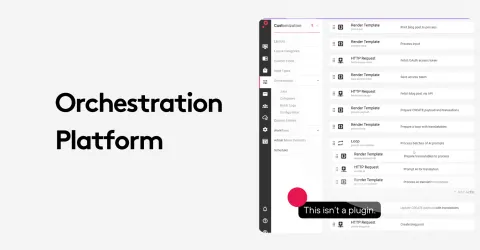
To avoid this, VZug can instead have Core dna do it for them. Core dna's automation tool allows us to set up a recurring daily task to verify all items. Core dna can make an API call to have all of VZug's warehouses linked to a brand-new product if it isn’t already linked. Also, Core dna can check warehouse stock and keep it updated.
So, in this case, with VZug, Core dna is not even a CMS or platform. Core dna is just a tool that allows them to automate their internal process. This is possible if the software you're working with supports API and integration.
Conclusion
B2B customers have higher expectations than ever before. Therefore B2B eCommerce companies are trying to make the browsing and buying process more convenient, quick, and personalized. Although an ERP integration has many advantages, improved customer relationships are just the beginning. Better fulfillment, more data-driven insights, improved communication, cost-savings, and improved businesses process are all side effects of an ERP program.
ERP system integration is crucial for monitoring the progress of a B2B eCommerce company and determining where improvements are needed.
Have questions? Speak with our experts to find your ideal content solution
Summarize with